Jake Rosenberg interview 【Eng.】
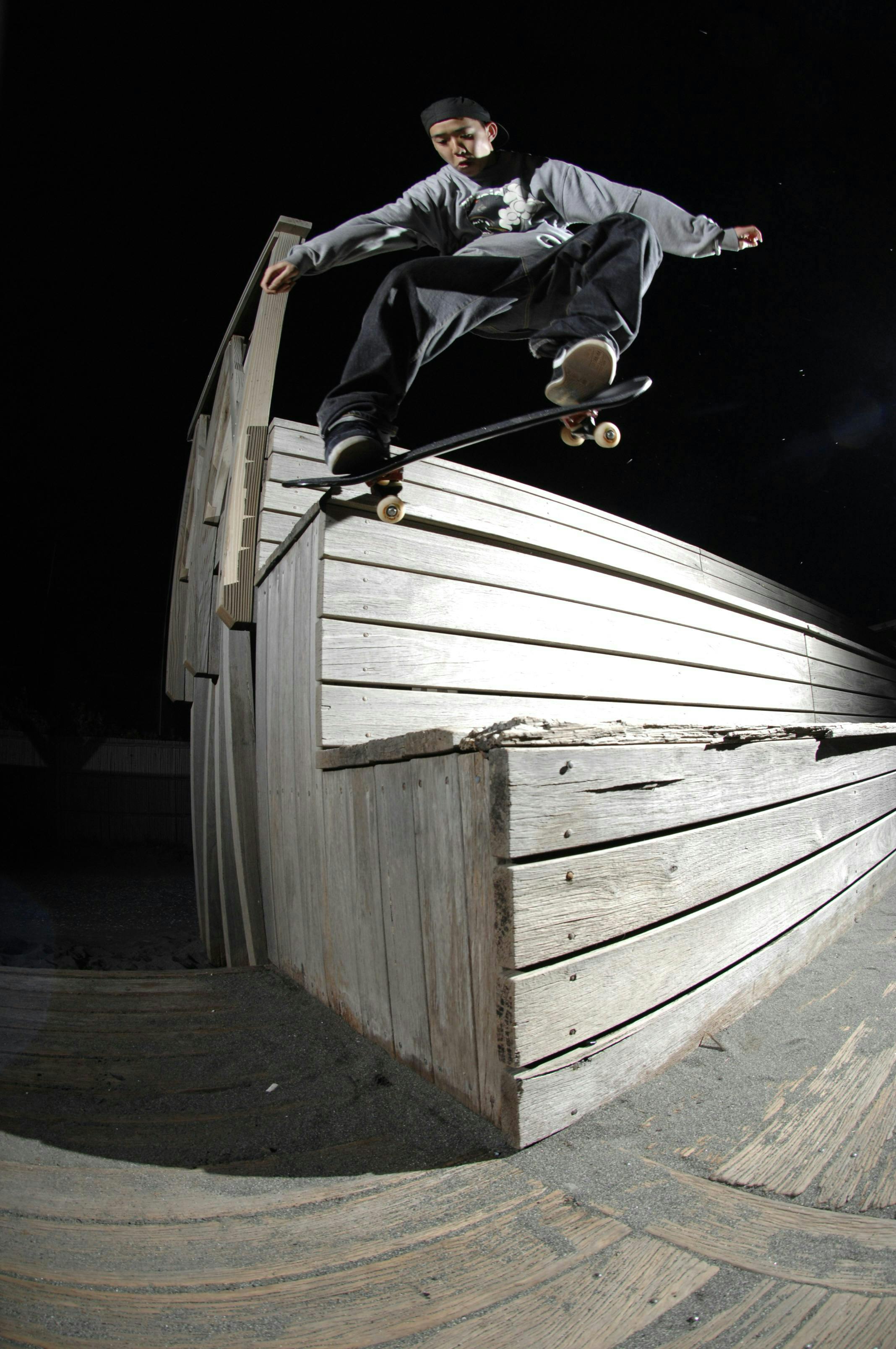
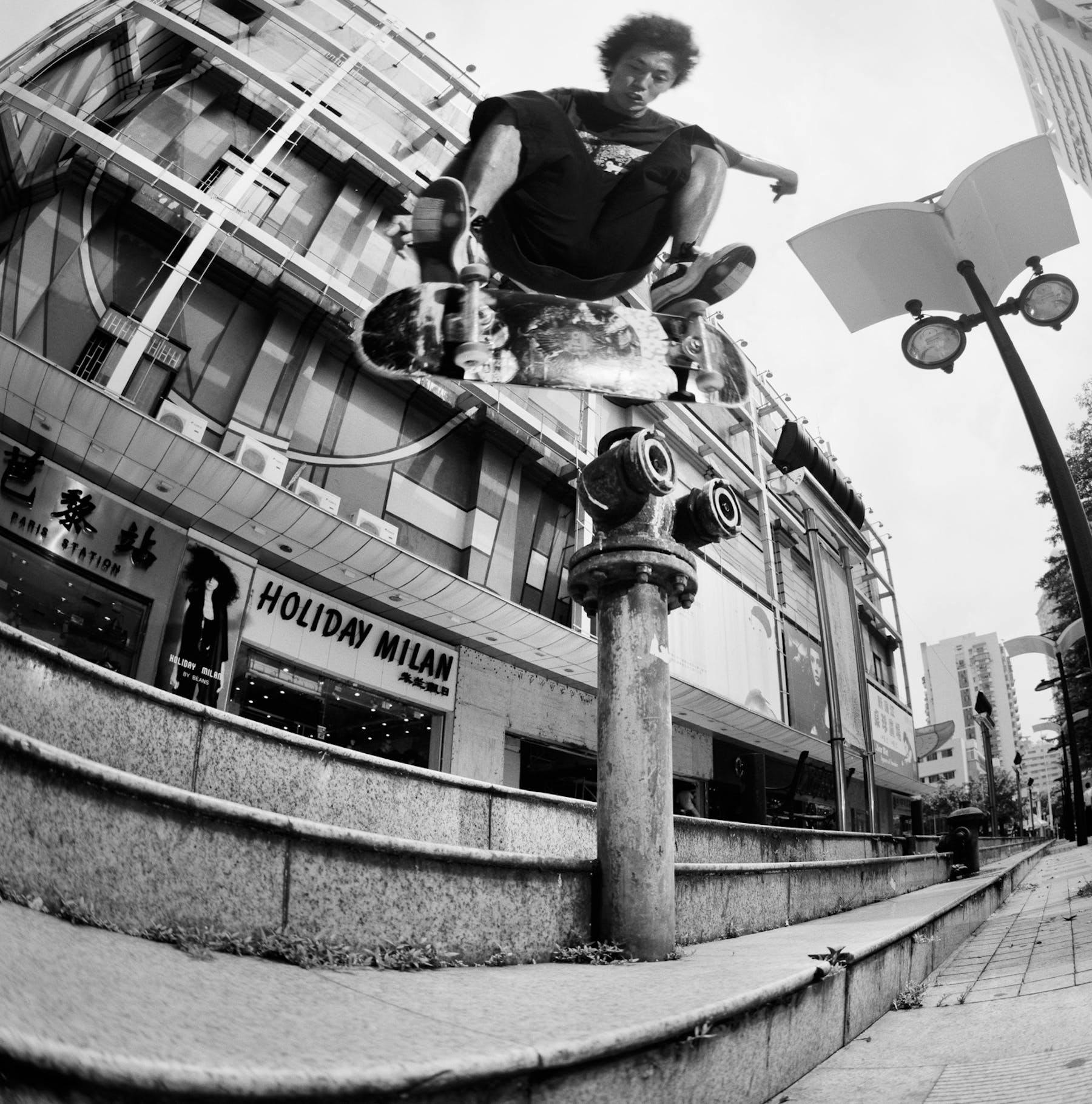
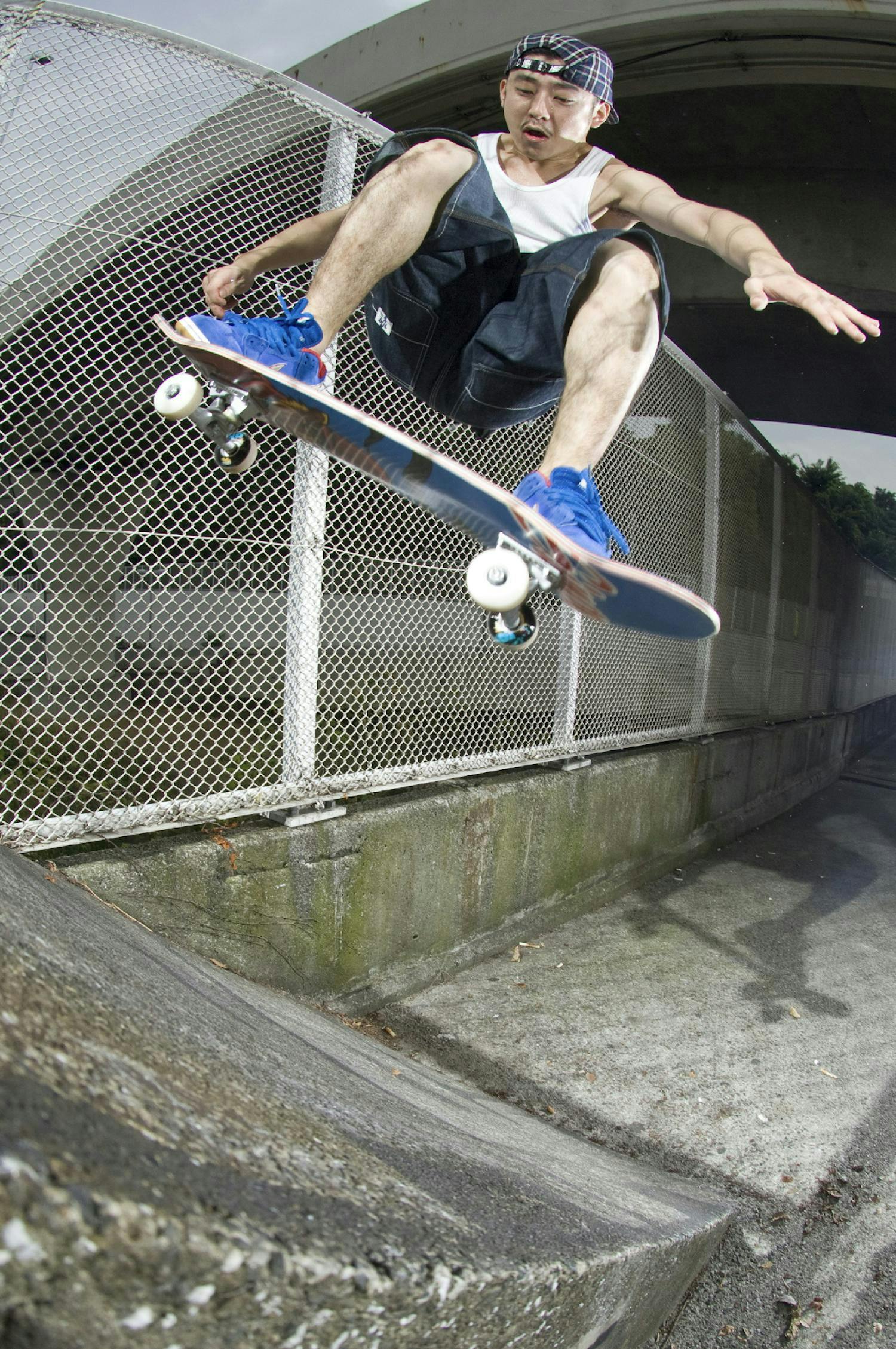
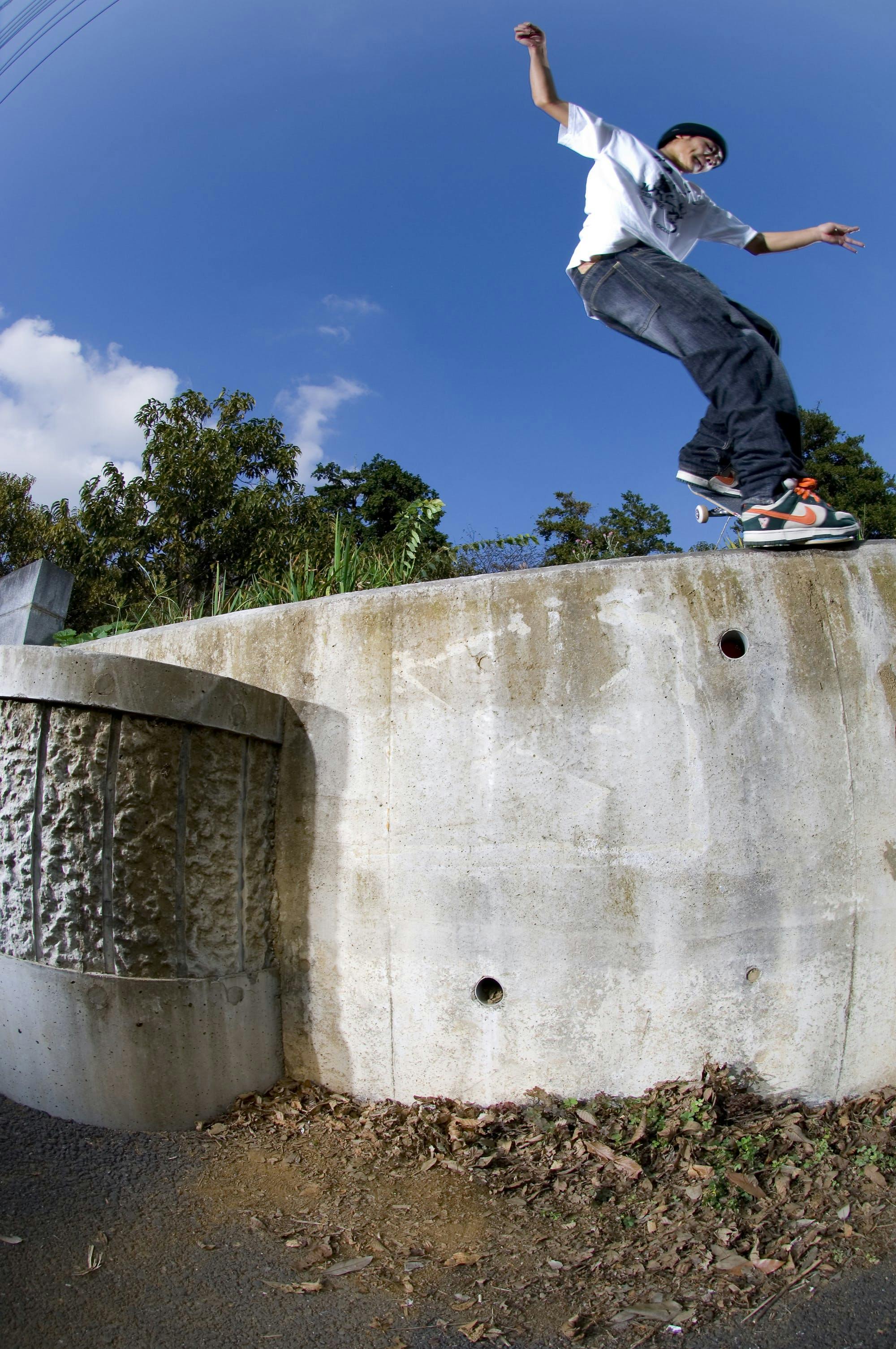
Interview by Anthony Claravall, Photo by Nobuo Iseki, Special thanks CB-san from Heshdawgz
Jake Rosenberg is the filmmaker behind legendary early ’90s skate videos like Questionable (1992) and Virtual Reality (1994). Right at the moment when skateboarding made a massive shift toward street skating. Still active today as a director, Jake has now compiled a photo book of images he shot back then at the equally legendary skate spot, EMB. He calls it EPICENTER, the point of origin.
To celebrate the release, we caught up with him at a signing event at Heshdawgz Skateshop in Harajuku.
Interview by filmmaker Anthony Claravall, who came up inspired by Jake’s work.
ーSo the 1st question is actually about videography and photography. When did you start shooting photos and filming?
When I was very, very young, when I was around 10 years old, I went to summer camp and I started taking still photographs. When I was very young, I had a camera, and I was always very comfortable with it. Around the same time, I started filming Super 8 on the family film camera.
I made stop motion, Star Wars battle scenes and stuff on the Super 8.
ーYou were just kind of shooting photos of your daily life and family stuff?
Yeah, you know, you'd go to Disneyland and you'd shoot photos. You'd go to an event, you'd shoot photos, it was always around friends and family. You know?
Then I started taking a lot of photos every summer camp.
And then when I found skateboarding, I mean, what attracted me was always the filming in the videos.
ーSo was it mostly video or was it photography as well?
I mean, you always first see photography with skateboarding because of the magazines. And then the videos were right after. But I was taking photos at skate camp in 1988 and then I started to want to shoot video after that.
ーWhat skate camp was that?
That's YMCA Skatecare in 1988. Santa Clara. And I met Mike Ternaski there, and I kind of helped them film the H Street video.
ーInsane.
While they were at skate camp.
ー1988, you were 16, 15?
15.
ーWhat cameras actually were you using at that time?
So in 1988, I had a Ricoh, that was my still camera. Then I had my father's Nikon FG, which is a really simple Nikon. Then in 1989, I got a Canon camera, I started filming with a Canon video camera, 8 millimeter, not Hi-8.
ーWith the still cameras, were you shooting with flash?
Mostly everything was black and white or color, no flash. Then in 1989, I start shooting properly with flash, with black and white and slide film.
ーDid you have a focal length of choice or a lens that you preferred?
I mean, I started always wanting to be wider for whatever reason. I had a zoom lens that was 28mm to 85mm F4.
ーAfter Virtual Reality did you film other skate videos?
So I edited together Secondhand Smoke because Mike Turnowski had passed away.
And then I did a couple of 411 parts. I did Will Harmon's 411 part, and I did Panama Dan's 411 part. That’s why they had Del songs.
ーTell us about your journey in cinematography and directing, to what you do today.
I knew what a director was when I was a kid because of Star Wars and George Lucas.
You knew George Lucas directed Star Wars. You knew that Steven Spielberg directed Jaws. Right? And Raiders of the Lost Ark.
So I think I always wanted to make movies or be involved in some way, but I didn't really know how to do that exactly. When I got into skateboard videos and I started filming, eventually you want to just make a movie, you want to do more.
And so I decided to go to film school to learn how to be a director. And, you know, I could always film, so I still kept filming. But then I sort of shifted my focus on directing.
One of my favorite things about being a director is you get to collaborate with so many people who are so talented.
Of course, I could hold the camera and I could film, but I much prefer having someone else who's talented and talking to them about, “Oh, this is what I think, what do you think?”
That collaboration gets us someplace that's very unique, and to me, very beautiful.
But it really was going to film school and taking every opportunity to film and then directing a bunch of music videos for Hieroglyphics, that was sort of the beginning of my formal directing career.
And then it kind of grows and transitions for a while until I'm doing a lot of editing and post production.
ーDo you remember any Japanese skaters from that era that might have skated EMB?
Not off the top of my head. I know some Japanese skaters now, like Yuto. I live close to Hollywood High so I know Funa, who front crooked Hollywood High like 1st try. So to me, the Japanese skaters have like killed Hollywood High.
But growing up, I don't necessarily remember, I think Lester Kasai is Japanese. Spencer Fujimoto is Japanese.

ーThat leads me into my next question. Your book is called Epicenter, EMB was the epicenter of skateboarding, San Francisco is also the epicenter of an earthquake fault.
Today a lot of people would say Japan is like today's epicenter of skateboarding, what is your opinion on that?
I think the Japanese skaters are very technical and very confident. I really feel that when I see Yuto skate. I feel like you can tell a little bit about his story, with his dad being a taxi driver, right? And knowing humble beginnings from his skateboarding.
That's one of the positive things from the Olympics is that you have a wave of cultures that are embracing skateboarding because it's now on a global stage. But I think Japanese skateboarders in the last decade have made a mark, saying “we're important contributors of this culture”, and it's undeniable. The Japanese female skaters are insane. The level of technicality and the level of tricks, so insane. I think it's fair to say that there's a really incredible movement of skateboarding in Japan, it’s a scene that influences all of skateboarding.
ーMy last question is if you had advice for someone who wanted to start shooting photos or filming?
-I get asked this question a lot, and the answer is kind of simple but it's a little bit hard as well because it requires you to learn how you feel about making things. A lot of times when you make things, you're motivated by trying to do what someone else has done. You go “Oh, you look at what someone else did... I want to do that”. But the trick is to be inspired by them, and then you find something that you think is cool, or you think is important, or a story that you want to tell, and then you kind of make it the goal to finish that. I think that in the process, if your heart is in that process, in the effort, there's no way you don't sort of win in that scenario.
I feel like filmmaking and filming, you fail up.
Because the first time you do something is always very hard, but the second time will be a little bit easier. And even if the first time wasn't like a hit, you know more of what you're doing the second time.
The beautiful thing about filmmaking is you never stop learning, and learning your own taste. Yes, you can be influenced by others, but the thing that everybody wants to see is one person's unique point of view. When we think of the movies that mean the most to us, it's an interesting filmmaker who told the story and what it meant to them.
Going to film school, Kurosawa is one of my all time favorite directors. He has one of the most diverse bodies of work of anybody in the history of cinema. He has action movies, thrillers, dramas, he has crime movies. He has samurai epics, but there's this common theme of somebody who has a unique life or unique life experience. I think you feel transported in Kurosawa's work, whether it's in the past or within the present. But Yasujirō Ozu is very different, right?
All of these different filmmakers are trying to be true to something that they feel.
So my advice is search for feeling and put what you have into that feeling. And know that the more you do it, the easier it gets. And then it gets really hard, because once you really know the feeling then you have to try to capture it.
ーThank you, thank you so much.
I just want to say everyone here is a huge fan of your work and a lot of what we do; Iseki is a photographer and I'm a videographer, Mouse is a videographer, Charlie is a videographer, is because of your work and we are all influenced in a huge way from all those videos you made.
I deeply appreciate hearing that because when I was a kid, I was just doing what I loved with people I loved, and to know that people saw something that they could take inspiration from, that's great, so thank you.